Machine monitoring will show you that the Mazak sat idle for forty minutes at ten past two. It can't tell you the fixture was still on the other side of the shop. Senloq tracks the tooling, trolleys, stillages and trucks moving round the floor, so an idle machine gets matched to the thing that hadn't arrived yet.
Tags on the assets, receivers on the ceiling, positions on your screen. We design it, mount it and configure it.
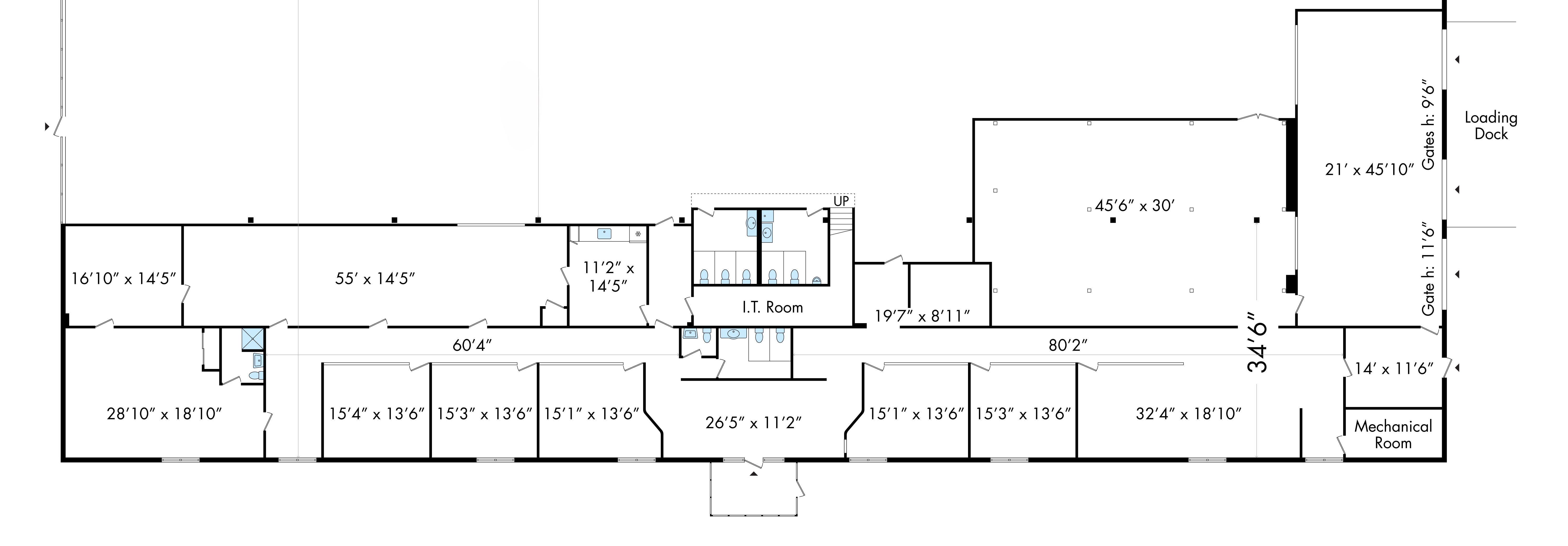
We work from your existing plan. If you haven't got one, we'll survey and draw it.
Not all of it at once. Most start with one problem that's costing them obvious money.
Search any jig, gauge or fixture and see where it is now. Search time drops to seconds, and you stop replacing kit that was never lost, only mislaid.
Follow every batch through the process. A job stalling between operations shows up while it's happening rather than at the end of the week.
See where the forklifts are working and which are sat idle. Balance the workload and find out whether you actually need the third one.
Crates, stillages and racks counted live by area, with an alert before line-side stock runs dry.
Travel paths, dwell times and cycle times mapped across the process. The spaghetti diagram draws itself instead of someone walking round with a clipboard for a week.
Heatmaps showing which areas are crowded and which sit empty. Useful evidence when you're arguing for a layout change.
Draw a rule round any area and get told when something arrives, leaves, or has been sat there too long.
A full history of where anything has been, with timestamps. Useful for quality investigations and for arguments about what happened.
Knowing which bay something is in is enough for most jobs. Knowing where it is to the metre costs more and is worth it for fewer things. Same tags, same dashboard, so you can start with one and move to the other without ripping anything out.
Lightweight coverage telling you which area every asset is in.
Angle-of-arrival and ultra-wideband anchors placing each asset live on the plan.
Most sites end up with a mix: presence-level across the whole building, precision in the two or three areas where exact position earns its keep.
Unlike the machine sensors, this one isn't a job for your electrician. We do it.
We walk the site, take your floor plan, and work out how many receivers it needs and where they go.
A coin-sized tag goes on every tool, trolley, pallet or truck you want to see. Battery life is two to five years depending on how often it reports.
We mount and wire the receivers, and configure the coverage. Ladders and cabling are our problem, not yours.
Assets appear on your plan and move as they move. Search by name, replay a path, set alerts, on any screen.
The awkward bits, before you spend anything.
Almost every shop that ends up tracking assets started by measuring machines, because that's where the cheapest evidence is. Thirty days of machine data usually points straight at whether material movement is your problem. If it is, this is the answer to it.
Fifteen minutes on the phone. Tell us what goes missing and how often, and we'll tell you whether this is worth doing.
Book a 15-minute callWe use cookies that make the site work, and we'd like to use Google Analytics to count page views. Analytics only runs if you say yes. Details in the cookie policy.